
Student Housing
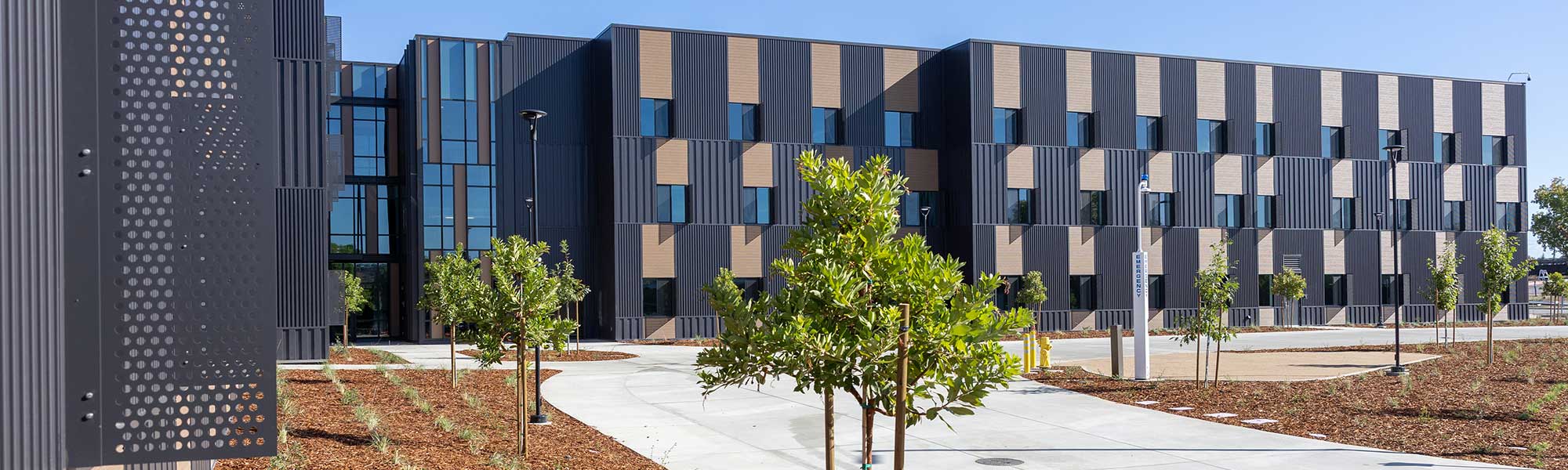
Sierra Hall: A Living-Learning Community for Students
Sierra Hall serves as a centrally-located space on campus, creating community for students. It provides services and amenities that encourage students to participate in campus life, including programs, activities and events. It is also an empowering space — offering educational opportunities where basic needs are met and life skills are learned.
How to Apply for Student Housing
Please note that housing placement is not guaranteed. We encourage students* to apply early. Students applying for housing might be placed on a waitlist – depending on demand and the number of applications received.
Please follow these steps to complete your student housing application:
Step 1. Apply to Sierra College
Access the Student Housing Portal using mySierra log in credentials. If you are a new incoming student, you will first need to apply to attend Sierra College and have an active mySierra account to access the Student Housing Portal. If you just activated a mySierra account, you will need to wait one business day to access the Student Housing portal.
Step 2. Submit Your Housing Application*
Log in to the Student Housing Portal to complete your student housing application. Make sure to select the correct term for your housing application. Be prepared to share contact information, emergency contact information, health insurance information, and other important details. Please read all information carefully about your options, cancellation policies, etc., before submitting your application.
*If you are under the age of 18 at the time of applying for student housing, a parent or guardian must sign the Parent Guardian License Agreement Signature Sheet and Consent for Treatment form (available in the Student Housing Portal) and upload it to your housing application. Any application submitted for a student under the age of 18 without this form uploaded will be considered incomplete.
Step 3. Check Your Housing Application Status
Students will be notified when they have a confirmed bed space in Sierra Hall. You can refer back to your application for your Application Status at any time. It is important to check your Sierra College email often. If our student housing is full, you might check out this list of local rental options.
Step 4. Bed Space Offer and Pay the Deposit
Room offers will be sent to the student’s Sierra College email address. Students who receive a room offer will have 5 days to accept the offer and pay the required deposit. If the offer is not accepted and the deposit is not paid within the 5-day timeframe, the student’s housing application will be cancelled. Students who decline a room offer are also choosing to cancel their student housing application.
Payment of the deposit is required to confirm a student’s acceptance of a space in Sierra Hall. Students who receive a room offer will be sent an email from Student Housing with instructions on how to submit the deposit. Only students who receive a room offer for a space in Sierra Hall are required to pay a deposit. Students who are waitlisted will not be required to pay a deposit unless and until they are offered a space.
Learn More About Sierra Hall
- February 16, 2027: Fall 2027 Housing Application becomes available to current residents.
- March 2, 2027: Fall 2027 Student Housing Application opens
- April 1, 2027: Initial application deadline; applications will remain open, and all other applicants will be placed on the waitlist
- April 1, 2027: Fall housing accommodation and/or modification initial submission deadline
- April 1, 2027: Fall roommate search and selection closes
- April 19, 2027: Housing offers and waitlist position notifications sent to applicants
- May 1, 2027: International Student deadline
- May 13, 2027: Post fees to student accounts
- June 12, 2027: Sixty days before the beginning of the license agreement: Cancellation deadline without penalty.
- July 12, 2027: Thirty days before the beginning of the license agreement: Cancellation with penalty.
- August 5, 2027: Payment due for fall 2027 residence hall fees
- August 12, 2027: Fall 2027 Move In day
- August 13, 2027: Resident orientation
- December 10, 2027 by 4pm: Fall move out (*Winter break housing is available at an additional cost)
- Sept. 29, 2026: Spring only application available to everyone – Apply for Student Housing
- Oct. 31, 2026: Spring 2027 initial housing application deadline
- Oct. 31, 2026: Housing accommodations and modification initial deadline
- Nov. 21, 2026: Cancellation deadline for Spring 2027 applications
- Late November 2026: Housing fees posted to Spring 2027 student accounts
- Jan. 21, 2027: Spring 2027 resident move-in day
- Jan. 22, 2027: Mandatory resident orientation
- Feb. 7, 2027: Spring 2027 housing application deadline
- May 21, 2027 by 4pm: Spring move out (*Housing during the break before the summer semester is available at an additional cost for spring residents accepted for summer.)
- April 5, 2027: Summer 2027 Student Housing Application opens
- May 1, 2027: Initial application deadline; applications will remain open, and all other applicants will be placed on the waitlist
- May 1, 2027: Summer housing accommodation and/or modification initial submission deadline
- May 1, 2027: Fall roommate search and selection closes
- May 5, 2027: Housing offers and waitlist position notifications sent to applicants
- June 7, 2027: Summer move in
- July 29, 2027: Summer move out
- February 24, 2026: Fall 2026 Housing Application becomes available to current residents.
- March 10, 2026: Fall 2026 Student Housing Application opens
- May 1, 2026: Initial application deadline; applications will remain open, and all other applicants will be placed on the waitlist
- May 1, 2026: Fall roommate search and selection closes
- May 1, 2026: Fall housing accommodation and/or modification initial submission deadline
- March 10, 2026: Fall 2026 Student Housing Application opens
- May 1, 2026: International Student deadline
- May 12, 2026: Housing offers and waitlist position notifications sent to applicants
- May 15, 2026: Post fees to student accounts
- June 13, 2026: Sixty days before the beginning of the license agreement: Cancellation deadline without penalty.
- July 13, 2026: Thirty days before the beginning of the license agreement: Cancellation with penalty.
- August 5, 2026: Payment due for fall 2026 residence hall fees
- August 13, 2026: Fall 2026 Move In day
- August 14, 2026: Resident orientation
- December 11, 2026 by 4:00pm: Fall move out (*Winter break housing is available at an additional cost)
Students who meet income eligibility requirements will be prioritized, with additional beds available for those who are non-income eligible. Learn more about the income eligibility requirements.
We encourage everyone to apply for Financial Aid, which can be used toward student housing costs. We also offer different payment options. To learn more about tuition and fees, visit Costs.
- Income Eligible – Total Base Cost: $3,500 per semester (with Basic Meal Plan)
- Non-Income Eligible – Total Base Cost: $5,280 per semester (with Basic Meal Plan)
Residence Hall Costs
The following housing costs are only for the Fall and Spring academic semesters. Winter and Summer session costs, as well as breaks between Spring-Summer and Summer-Fall are estimated costs.
| Fee | Description | Cost |
|---|---|---|
| Residence Hall Room Fee (Fall and/or Spring) |
Semester | Income eligible: $2,200 per semester Non-income eligible: $3,980 per semester |
| Residence Hall Room Fee (Summer) | 8-week summer term | Income eligible: $990 (estimated cost) Non-income eligible: $1,791 (estimated cost) |
| Residence Hall Room Fee (Spring-Summer Break) | Duration between the end of spring semester and beginning of summer session | Income eligible: $293 (estimated cost) Non-income eligible: $531 (estimated cost) |
| Residence Hall Room Fee (Summer-Fall Break) | Duration between the end of summer session and beginning of fall semester | Income eligible: $220 (estimated cost) Non-income eligible: $398 (estimated cost) |
| Residence Hall Room Fee (Winter Break) | Duration between the end of fall semester and beginning of spring semester. | Income eligible: $752 (not including meal plan) Non-income eligible: $1,360 (not including meal plan) |
| Meal Plan | Meal plans can be used on and off campus at participating locations. As occupants in the Residence Hall, all student residents are required to purchase a meal plan. | Costs vary. View meal plan options. |
| Electricity, Water, Garbage Utilities and Laundry Facilities | Electricity, water, garbage utilities and laundry facilities are included in the room fee (Students need to provide their own laundry supplies). | $0 |
| Refundable Security Deposit | A one-time deposit is required prior to move-in. The deposit will be refunded when the student ends their stay with us, as long as there are no damages or cleaning fees, and the student does not have any past due balances owed to the Residence Hall Office. | $250 |
| Residence Hall Parking Permit | Residents can park one vehicle on campus with the purchase of a Residence Hall parking permit, which can only be purchased at the Department of Community Safety. During the day, residents can park in any student-designated space on campus. After hours, they will have access to resident-only parking spaces located adjacent to Sierra Hall for added convenience and security. | Costs vary for cars, motorcycles and carpools. View our Parking Permits and Fees for details. |
| Internet | Student residents have free access to more than 115 Wi-Fi access points in Sierra Hall. | $0 |
As occupants in the Residence Hall, all student residents are required to purchase a meal plan. Each student will be automatically enrolled in the Basic Meal Plan. If a student would like to change their meal plan, they may do so in the Student Housing Portal.
- The deadline to change a meal plan selection is Move In Day. After this date, meal plans cannot be changed.
- Beginning Dec. 12, 2026, we will only offer the “Advantage Ca$h” meal plan option while the Student Center/cafeteria (Building J) is being remodeled. We will resume our “Meal Swipe” meal plan once the cafeteria reopens (estimated to reopen in fall 2027). Advantage Ca$h can be used at a variety of participating on- and off-campus locations.
- The total value of the student’s meal plan during a specific semester will be split in two and loaded onto the student’s meal card by Residence Life and Housing Administration in two installments. The first half of the meal plan value will be loaded on the students’ account at the beginning of the Term of the License Agreement, and the second half will be loaded during week 9 of the semester.
Winter Break Meal Plans (Dec. 12, 2026 – Jan. 13, 2027)
| Plan | Advantage Ca$h** |
|---|---|
| Basic | $420 |
| Standard | $510 |
| Plus | $600 |
Spring 2026 Meal Plans (Start Jan. 14, 2027)
| Plan | Cost Per Semester | Advantage Ca$h** Per Semester |
|---|---|---|
| Basic | $1,300 | $1,300 |
| Standard | $1,600 | $1,600 |
| Plus | $2,000 | $2,000 |
| Premium | $2,500 | $2,500 |
| Summer Meal Plan (Mandatory) | $650 | $650 |
| Optional Meal Plans (Available for purchase during break between Spring/Summer and Summer/Fall) | Not applicable | $130 |
| **Advantage Ca$h can be used at approved locations both on and off campus. |
MEAL PLAN TERMS OF LICENSE AGREEMENT
- The Student understands that a requirement of occupancy in the Residence Hall is the purchase of a meal plan.
- The Student’s participation in the meal plan may not be transferred or assigned to anyone else.
- The District will not reduce the License Fee based on the Student’s non-use of the meal plan or because of dietary or related restrictions, including, but not limited to, food allergies, vegan, or vegetarian requirements.
- The Student’s meal plan will become invalid upon termination of License Agreement. At the end of the Term, any unused meal swipes and funds will be removed from the Student’s meal card. There are no refunds for unused monies that are not used by the end of the semester.
- The Student’s meal plan may be placed on hold by Residence Life and Housing Administration in the event the Student has failed to submit past due payments and/or paperwork to the Residence Hall Office. The meal plan may also be placed on hold for failing to meet with Residence Hall Office staff upon request, and/or for failing to complete any sanctions related to any behavior and/or conduct issues.a
As occupants in the Residence Hall, all student residents are required to purchase a meal plan. Each student will be automatically enrolled in the Basic Meal Plan. If a student would like to change their meal plan, they may do so in the Student Housing Portal.
- The deadline to change a meal plan selection is Move In Day. After this date, meal plans cannot be changed.
- Each meal plan includes weekly meal swipes and an “Advantage Ca$h” balance.
- Meal swipes can only be used on campus in the Wolverine Cafe in the Campus Center (Building J).
- Advantage Ca$h can be used at a variety of participating off-campus locations.
- The total value of the student’s meal plan will be split in two and loaded onto the student’s meal card by Residence Life and Housing Administration in two installments. The first half of the meal plan value will be loaded on the students’ account at the beginning of the Term of the License Agreement, and the second half will be loaded during week 9 of the semester.
Meal Plans
| Plan | Cost Per Semester | Meal Swipes* Per Semester | Advantage Ca$h** Per Semester |
|---|---|---|---|
| Basic | $1,300 | 80 | $460 |
| Standard | $1,600 | 80 | $760 |
| Plus | $2,000 | 112 | $824 |
| Premium | $2,500 | 160 | $820 |
| Summer Meal Plan (Mandatory) | $650 | 40 | $230 |
| Optional Meal Plans (Available for purchase during break between Spring/Summer and Summer/Fall) | Not applicable | Not applicable | $130 |
| *A meal swipe is only valid at the Wolverine Cafe and typically includes an entrée, one side, and a drink OR only an entrée and drink if ordered off the Special’s menu. | **Advantage Ca$h can be used at approved locations both on and off campus. |
MEAL PLAN TERMS OF LICENSE AGREEMENT
- The Student understands that a requirement of occupancy in the Residence Hall is the purchase of a meal plan.
- The Student’s participation in the meal plan may not be transferred or assigned to anyone else.
- The District will not reduce the License Fee based on the Student’s non-use of the meal plan or because of dietary or related restrictions, including, but not limited to, food allergies, vegan, or vegetarian requirements.
- The Student’s meal plan will become invalid upon termination of License Agreement. At the end of the Term, any unused meal swipes and funds will be removed from the Student’s meal card. There are no refunds for unused monies that are not used by the end of the semester.
- The Student’s meal plan may be placed on hold by Residence Life and Housing Administration in the event the Student has failed to submit past due payments and/or paperwork to the Residence Hall Office. The meal plan may also be placed on hold for failing to meet with Residence Hall Office staff upon request, and/or for failing to complete any sanctions related to any behavior and/or conduct issues.a
The eligibility criteria for students occupying low-income student beds is provided in California Education Code (EDC) §17200 and it was established in the Higher Education Student Housing Programs’ enabling statute Senate Bill 169 (2021) and Assembly Bill 183 (2022).
The definition for low-income students is based on their eligibility for at least one of the following state and federal need-based student aid programs:
- Pell Grant financial aid under the federal Pell Grant program (20 U.S.C. Sec. 1070a)
- A Cal Grant under Chapter 1.7 (commencing with EDC § 69430) of Part 42 of Division 5 of Title 3 (in many cases, this would be Cal Grant B)
- An exemption from paying nonresident tuition pursuant to EDC § 68130.5 provided that the student also meets income criteria applicable to the California Dream Act application
A California College Promise Grant (CCPG) fee waiver from a California Community College pursuant to EDC § 76300.
Sierra Hall provides a safe place for students to live and learn. There will be 24-hour on-call response available from our professional staff. They will be supported by members of our Department of Community Safety team who work in close partnership with local fire, police and emergency response personnel.
- We will also have student resident advisors on every wing who, along with our professional staff members, will receive extensive and ongoing training in crisis response, emergency preparedness, and conflict management.
- The building will be accessible only through the main entrance, and residents will need to use their key card to gain entry.
- Security cameras will be installed at strategic locations to help ensure the safety and peace of mind of all residents.
What is the room layout like? Are they singles or doubles?
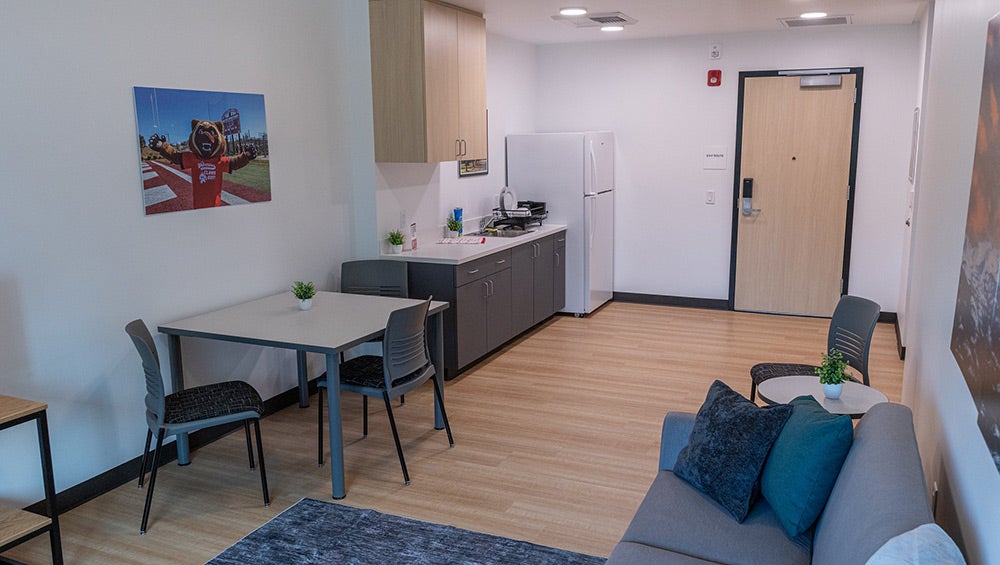
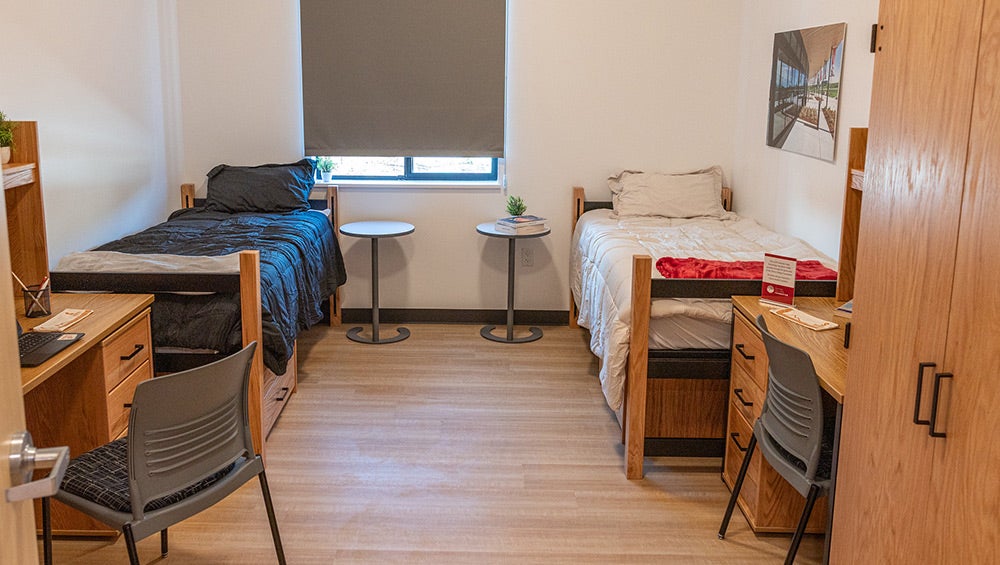
Each unit houses six students in total. Residents share a furnished living room, a kitchenette, and three separate bedrooms—each designed for two students to share. The unit also includes one toilet room, one shower room, and one combination shower-and-toilet room to support shared living while offering flexibility and privacy.
What’s happening to the existing student housing building?
The District has long-term plans to modernize and repurpose the existing student housing facility. While the focus is currently on launching the new housing complex, the original building will be thoughtfully updated over time to continue serving students in alignment with our evolving campus needs and strategic priorities.
Are accessible/ADA-compliant units available?
Yes. All student housing units, bedrooms, and bathrooms are either fully accessible or can be easily configured to meet accessibility needs. If you require specific accommodations, our team will work with you to ensure your living space is supportive and compliant.
Will food services be expanded?
Yes. In response to student housing needs, food service hours will expand to include evenings and weekends. Students will be able to use their meal plan, cash, or card to purchase food during these extended hours. Additional details about meal plans and dining options will be available closer to move-in.
Will there be security cameras in or around the building?
Security is a top priority. The building will be accessible only through the main entrance, and residents will need to use their key card to gain entry. Security cameras will be installed at strategic locations to help ensure the safety and peace of mind of all residents.te
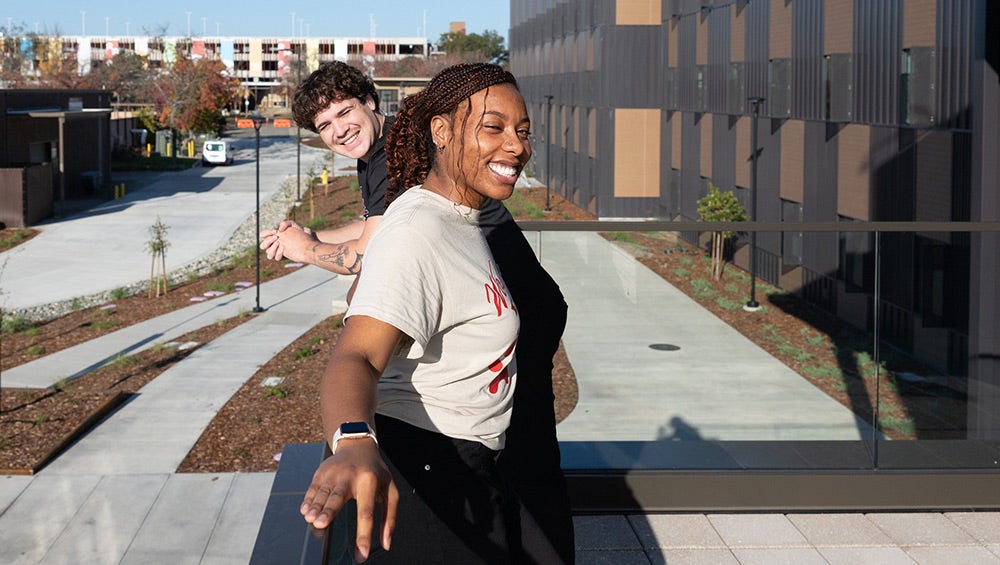
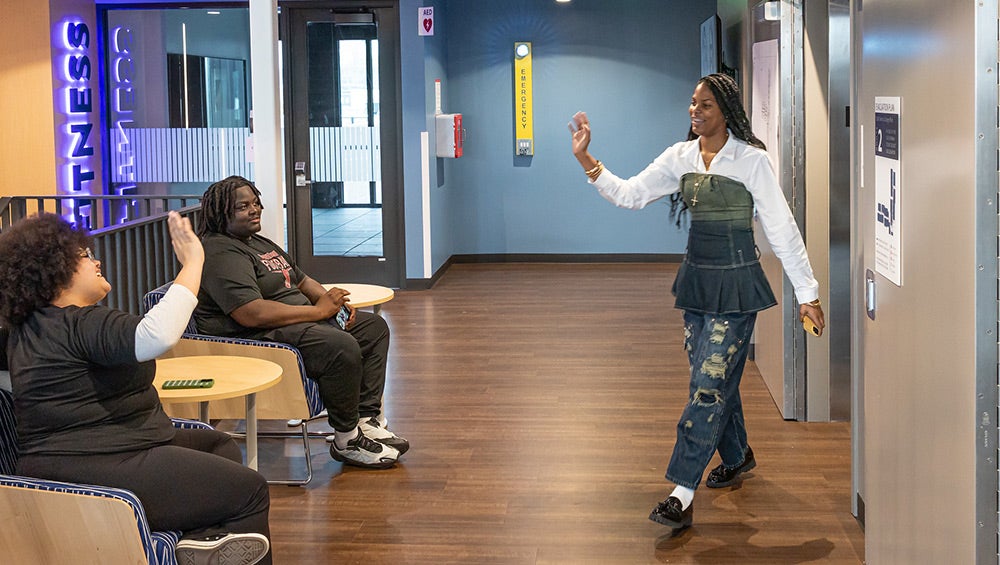
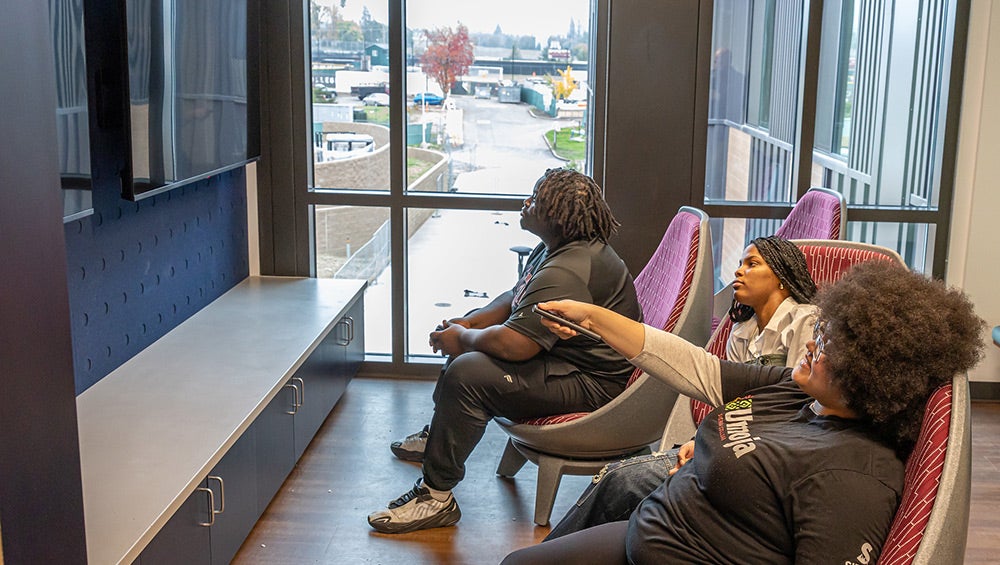
Campus Living with Students in Mind
Residence Hall Requirements, Policies and Information
- Beginning Summer 2027, students must be 18 years of age or older to move into Sierra Hall.
- Proof of current health insurance coverage is required of every student prior to moving into the residence hall and must be in effect at all times during residency. If you need assistance obtaining health insurance, please contact the Basic Needs Center.
- Any student who wishes to live in the Residence Hall must be enrolled in at least 12 units at all times during the academic year.
- Residents living in the residence hall during the summer must be enrolled in at least 3 units at all times while they are living in the residence hall.
- Students must regularly attend each of their classes while maintaining a semester and cumulative GPA of 2.0 or higher.
For more details, please review the Standards of Student Conduct.
Please review our Standards of Student Conduct.
Please thoroughly review our Residence Hall Handbook, a guide for residents that contains requirements, policies, information, emergency procedures for the residence hall and other campus resources.
Sierra College’s policy and procedures for Tuberculosis and Meningitis have been adopted from the recommendation of the Centers for Disease Control (CDC), the Advisory Committee on Immunization Practices (ACIP) and the American College Health Association (ACHA).
Tuberculosis Clearance (International Student Requirement)
To be a student at Sierra College you must provide evidence of freedom from tuberculosis. If you are unable to receive the skin test at home, we will offer it at Sierra College. However, to make your transition easier it is best you do the screening while in your home country. All documentation must be translated into English, be within three months of the beginning of the semester for which you are applying, and must be completed in one of the following ways:
- Mantoux skin test, 5 T.U. (Tuberculin Units) with measurement in millimeters
- 0-4mm is negative
- 5-9mm is questionable. Repeat test no sooner than six days from initial test
- 10mm and above is positive. Chest x-ray needed
- Negative chest x-ray for those who react to the Mantoux test with 10mm or more or who have reacted to the Mantoux skin test in the past.
Meningococcal Meningitis Form
All incoming freshmen residing in on-campus student housing receive information about Meningococcal Meningitis and indicate on their Housing Application whether or not they received or declined the vaccine.
About Meningococcal Disease
- What is meningococcal disease? Meningococcal disease is caused by the Neisseria meningitides bacteria. The two most common forms of meningococcal disease are meningitis, an infection of the fluid and covering of the spinal cord and brain; or septicemia, an infection of the bloodstream. Meningitis has other causes as well, the most common being viral infection. Learn more about meningitis from the American College Health Association and the Centers for Disease Control and Prevention.
- How common is Meningococcal disease? Meningococcal disease is uncommon. In the U.S. each year there about 2,500 cases (1-2 cases for every 10,000 people), with 300-400 occurring in California. Of 14 million students enrolled in colleges nation-wide, approximately 100 acquire meningococcal disease each year.
- How is Meningococcal diagnosed? A diagnosis is commonly made by growing the bacteria from the spinal fluid or blood. Identifying the bacteria is important for the selection of the best treatment for the infection.
- Is the vaccine recommended for college students? The Centers for Disease Control and the American College Health Association both recommend routine vaccination for incoming freshmen residing in residence halls.
- Are college students at increased risk? Overall, undergraduate students have lower risk of acquiring meningococcal meningitis than the non-student population. College students who live in residence halls have a slightly increased risk of infection. Reasons for this increase are not fully understood, but probably relate to living in close proximity with others.
- How can I prevent meningococcal disease? You can protect yourself by maintaining good health and hygiene. As a general recommendation, you should wash your hands frequently. Avoid sharing items such as eating utensils, bottles, cigarettes, or lip balm. Contact a health care provider immediately if you are in close contact with someone who is known or suspected to have meningococcal infection.
- How are meningococcal bacteria spread? The bacteria are transmitted from person to person in secretions from the nose and throat. They are not spread by casual contact or by simply breathing the air near an infected person. The bacteria can live outside the body for only a few minutes; so if the germs contaminate a desk or book, they soon die and cannot infect anyone.
Sierra College is committed to the full participation of students with disabilities in all aspects of college life, including residential life in the Residence Hall, and it complies with all state and federal laws regarding equal access to housing. Sierra College has established the following procedures for requesting reasonable housing accommodations and modifications to ensure students with disabilities have equal access to housing at the Residence Hall.
Please Note:
- This document sets out the procedures for requesting reasonable housing accommodations and modifications, including requests for assistance animals. These procedures do not impose any limitations on service animals, which are animals that are individually trained to do work or perform tasks for people with disabilities. For more information about service animals on campus, please refer to Sierra College District Administrative Procedure 3440 (Service Animals).
Process for Requesting Reasonable Housing Accommodations
1. Submit Housing Accommodations and Modification Requests
Generally, to request reasonable housing accommodations and modifications, students must complete the Housing Accommodations and Modifications Request Form.
The Residence Hall Office encourages students to submit the form as early as possible. Sierra College provides reasonable housing accommodations and modifications based on need and as space permits, and timely submission of requests allows the Residence Hall to assess student needs and space availability. For deadlines, check the Important Housing and Application Dates for the semester the accommodation is requested.
Students may also submit requests for reasonable housing accommodation and modifications after room assignments have been completed. Sierra College will review and consider such requests as needed, throughout the academic year. However, housing options may be limited due to occupancy/resources in inventory.
Additional information regarding requests for academic accommodations and requests for assistance animals for students living on campus is provided below.
2. Provide Confirmation of the Need for Accommodation
Sierra College may request non-confidential information relating to a student’s request for a housing accommodation and modification. Students should not provide any information regarding medical history, diagnoses, or the names or types of medical conditions that they may suffer from when requesting a housing accommodation or modification.
A student should provide Sierra College with information confirming that they have a disability and that they have a disability-related need for the accommodation and modification requested from a reliable third party, such as a doctor or other medical professional. The confirmation should include the following information:
- Student’s name and identification number (if available);
- Confirmation that the student has a qualifying disability that limits a major life activity;
- Description of the accommodation(s) and/or modification(s) the student needs;
- Description of the relationship between the student’s disability and how the requested accommodation and/or modification is necessary for the student to use and enjoy housing opportunities at the Residence Hall;
- Description of how the third party is familiar with the student’s disability and the disability-related need for the accommodation and/or modification;
- Contact information for the third party; and
- The third party’s signature.
Depending on the housing accommodations and modifications requested, additional documentation may be required to evaluate the request. Sierra College may approve housing accommodations and modifications on a temporary basis (for a particular semester or full academic year), or permanently through the student’s time at Sierra College. Sierra College makes this determination on a case-by-case basis and will communicate it to the student at the time of initial approval.
3. Evaluation and Determination of Reasonable Accommodations
Sierra College determines reasonable housing accommodations and modifications based on need and considers requests on a case-by-case basis. The Residence Hall Accommodations Advisory Workgroup (RHAAW), in consultation with Student Accessibility Services and other Sierra College departments as needed, meets to review accommodation and modification requests. After reviewing a request, Sierra College may request that the student engage in an interactive process with Residence Hall staff. The Residence Hall will notify students of the status of their request in writing.
In certain circumstances, Sierra College may deny requests for housing accommodations or modifications, including, but not limited to, in the following circumstances:
- The student is not an individual with a disability;
- There is not a disability-related need for the requested accommodation or modification;
- The requested accommodation would constitute a fundamental alteration of Sierra College’s services or operations;
- The requested accommodation would impose an undue financial and administrative burden on Sierra College; or
- The requested accommodation would constitute a direct threat to the health or safety of others or would cause substantial physical damage to the property of others, and another reasonable accommodation would not sufficiently mitigate or eliminate the risks.
If Sierra College determines that it cannot grant a request, it will work with the student to identify if there is another accommodation and/or modification that is equally effective to meet their needs.
In cases where Sierra College denies a request for housing accommodations or modifications and the student does not accept an alternative accommodation or modification, or alternative accommodations are not available, Sierra College will provide students an explanation in writing of the reasons for the denial of requested housing accommodation(s) or modification(s). If Sierra College denies a student’s request for housing accommodations and/or modifications and the student does not accept an alternative accommodation or modification, or alternative accommodations or modifications are not available, the student will also have the option to terminate their housing agreement without incurring any penalties.
Students with disabilities are not responsible for paying a surcharge to cover the costs of reasonable accommodations or modifications that they need to have equal access to housing opportunities at the Residence Hall.
Requesting Academic Accommodations
Students living on campus must maintain enrollment in a minimum of 12 units at all times during the academic year. If a student needs an accommodation with respect to this requirement, they must submit this request with their academic counselor. The academic counselor can request the Reduced Unit Accommodation form from the Residence Hall Office.
Students seeking a Reduced Unit Accommodation are expected to maintain enrollment in a minimum of 9 units. Accommodation requests to be enrolled in less than 9 units will be evaluated by the Supervisor of Residence Life and the Associate Dean of Student Services prior to housing approval.
A student must submit a new Reduced Unit Load Accommodation form for each semester that their counselor recommends a reduced unit load. Students seeking an academic accommodation due to a disability should contact Student Accessibility Services (SAS) to seek services. Student Accessibility Services can be contacted by email at dsps@sierracollege.edu or by phone at (916) 660-7460.
Requesting an Assistance Animal
Sierra Hall does not allow pets in student housing; however, a student resident with a confirmed disability may request a reasonable accommodation related to their need for an assistance animal.
Students may not keep assistance animals in campus housing without prior approval from theResidence Hall. Students requesting an assistance animal as an accommodation are encouraged to complete the Housing Accommodations and Modifications Request Form and provide confirmation of the disability-related need for the accommodation, as outlined in Step 2 above.
The Residence Hall will accept and consider a request for an assistance animal at any time; however, students anticipating making a request for an assistance animal are encouraged to complete the process prior to moving into campus housing and always before bringing any assistance animal onto campus. Based on roommate matching considerations, requests for assistance animals are more likely to be granted promptly when received prior to room offers being sent out. If the student submits a request for an assistance animal after moving in, it is highly recommended that the student have a conversation with their roommate(s) about bringing an animal to live in their shared campus housing. If issues arise related to roommates and/or suitemates and the assistance animal, please contact the Residence Hall Office as early as possible so that assistance can be provided.
Sierra College may deny a request for an assistance animal if the assistance animal constitutes a direct threat to the health or safety of others or would cause substantial physical damage to the property of others, and another reasonable accommodation would not sufficiently mitigate or eliminate that harm.
If, after the interactive process, the Residence Hall approves a student’s request for an assistance animal, the student must provide proof of vaccination from a veterinarian and sign the Assistance Animal Owner/Handler Responsibilities Form. Assistance animals are the sole responsibility of the student and must be under their control at all times. The student is also responsible for any damages to property and for any injury caused by an assistance animal. Additionally, the student must provide to the Residence Hall Office a photo of the assistance animal, animal registration, proof of vaccination from a veterinarian and complete the Assistance Animal Registration Form.
The final step before the approved assistance animal enters student housing is scheduling a meet and greet with Sierra Hall Staff and the Director of Community Safety. This visit will determine if the behavior of the animal is suitable for student housing.
Students with approved assistance animals agree that the assistance animal will be well cared assistance animal for at all times and properly contained or restrained when the student is not present. An may not be left alone or in the care of others overnight in campus housing or for any period exceeding 24 hours without prior approval from the Residence Hall Supervisor or designee.
Students may bring their assistance animal into their residence at the Residence Hall. Assistance animals are not permitted in any other resident’s room or other campus buildings, except for common resident amenity spaces within the Residence Hall, if the student needs to be accompanied by the assistance animal in order to fully use and enjoy the amenity space. Assistance animals are not permitted in kitchens or public bathrooms.
In certain circumstances, a student with an approved assistance animal may be asked to remove the animal from the Residence Hall, including, but not limited to, if the assistance animal is unduly disruptive, poses a direct threat to the health or safety of others (e.g., if it displays vicious or aggressive behavior toward people or other animals), or causes substantial damage to the property of the Residence Hall or other individuals’ property.
Sierra Joint Community College District is committed to providing a safe and healthy environment for its students, employees, and visitors.
Smoking Policy
In light of evidence that the use of tobacco and exposure to second-hand smoke pose significant health hazards, the District has established a smoke, vapor and tobacco-free environment.
- The use of such products is prohibited upon all District-owned or controlled properties.
- The use of such products is also prohibited in all vehicles owned, leased, or operated by the District. This includes the smoking of cigarettes, pipes, cigars, or other tobacco products or the smoking of any substance.
- The use of smokeless tobacco products (e.g. chewing tobacco) and the use of non-regulated nicotine or other vapor producing products (e.g. electronic cigarettes) is also prohibited.
Anyone who violates this policy shall be deemed to have disrupted the orderly operation of the College and may be required to leave the premises. Those who violate this policy shall be subject to citation and fines per California Government Code section 7597.1
For more information about the smoking policy see Sierra College Board Policy No. 3570.
Drugs and Alcohol Policy
The use or presence of illegal drugs or alcohol is strictly prohibited in the residence halls or anywhere on campus. State law prohibits anyone, regardless of age, from possessing alcoholic beverages on a community college campus (Section 25608 Business & Professions Code).
District policy and Residence Hall rules support this law. Alcohol, drugs, or drug paraphernalia are not allowed in or anywhere near either Residence Hall. Violation may result in eviction. Any resident found to be in the presence of or possessing any alcoholic beverage or any illegal drug or paraphernalia in or around the residence halls may be evicted from campus housing on their first offense. Additionally, violators may be subject to suspension, expulsion, or arrest.
Prohibited items include, but are not limited to:
- 3D Printers
- Alcohol (regardless of age)
- Any item that is non-recognized to a UL standard by a nationally recognized testing laboratory
- Built-in wall or ceiling attachments
- Burning sage
- Candle, candle warmers
- Dart boards
- Electric bicycles, electric scooters, hoverboards, or other electric transportation devices
- Electric heaters and space heaters
- Electric blankets
- Extension cords and power strips without surge protection
- Firearms and ammunition
- Flammable materials such as candles, incense, explosives, fireworks, gasoline, propane, butane, combustible decorative materials (live holiday decorations), etc.
- Halogen lamps
- Heating/immersion coils
- Hookah smoking devices
- Hot plates
- Incense
- Irons without an automatic shut off feature
- Lava Lamps
- Oil burners
- Outlet adapters and power strips without surge protection
- Paraphernalia, including, but not limited to, bongs, pipes, rolling papers, etc.
- Personal microwaves
- Pets or animals of any kind, except fish. One five-gallon tank containing fish is allowed per room
- Space heaters
- Toasters and toaster ovens
- TV or radio antennae or any other objects that are placed outside the room window
- Water beds
- Weapons
The Sierra College campus community strives to provide a safe and secure environment for its students, employees and visitors. Residents are expected to assist in maintaining a safe environment within the Residence Hall complex. If safety and security issues arise, students should report these concerns to a member of the Residence Hall staff or to Community Safety.
Behavioral Intervention CARE Team
The Sierra College Behavioral Intervention CARE Team assists at-risk students who are displaying distressing behaviors that are escalating, concerning and require additional support. If you believe a student may pose an immediate threat to the health and safety of themselves or others, call 911 and/or Community Safety. Otherwise, submit a referral form from any of our campuses.
Residence Hall Security Measures
For those students living on campus, the residence hall has a computerized access system that controls all exterior doors. Residents are issued an access key for admittance to the building as well as a key to their room. Residents are not to admit non-residents into the Residence Hall who are not their guests. All guests must sign in with a member of the Residence Hall staff. This practice helps to ensure safety and security of the hall community. Students will be held responsible for their invited guests. Campus Community Safety Officers frequently patrol the residence hall parking lot, exterior building areas and grounds, and interior community areas. Residence Hall staff also provides a variety of programs throughout the academic year on matters of personal safety and precautionary tactics.
Personal Property Security Measures
Residents are responsible for the security of their personal property, and it is recommended that room doors remain locked at all times. Insurance on personal property is also recommended to help guard against financial loss. (Check to see if your family’s home owners policy covers you while at school.) You can also purchase theft/fire insurance with National Student Services, Inc.